
Why Some Interior Design Projects Keep Pulling You Back In
Have you found yourself working for the day, shut your laptop, walk away from your desk… and then 20 minutes later, something suddenly pops into your head!
“Wait… did we update that elevation after the client changed the kitchen layout?”
So now you’re opening the drawings again. Just to check one thing. Then you notice a design note that isn’t quite right. Or a contractor emailed asking for clarification on a detail. One revision got updated on the floor plan but not on the ceiling plan, and somehow, before you even realize it, you’re fully back inside the project again.
I honestly think a lot of interior designers live in this cycle more than people realize.
Not because the project is failing, it is usually the complete opposite. The client is excited, construction is moving ahead, and everything looks in control from the outside.
………But behind the scenes, the amount of information you’re carrying mentally keeps growing as the project progresses.
And I don’t think enough people talk about this side of interior design.
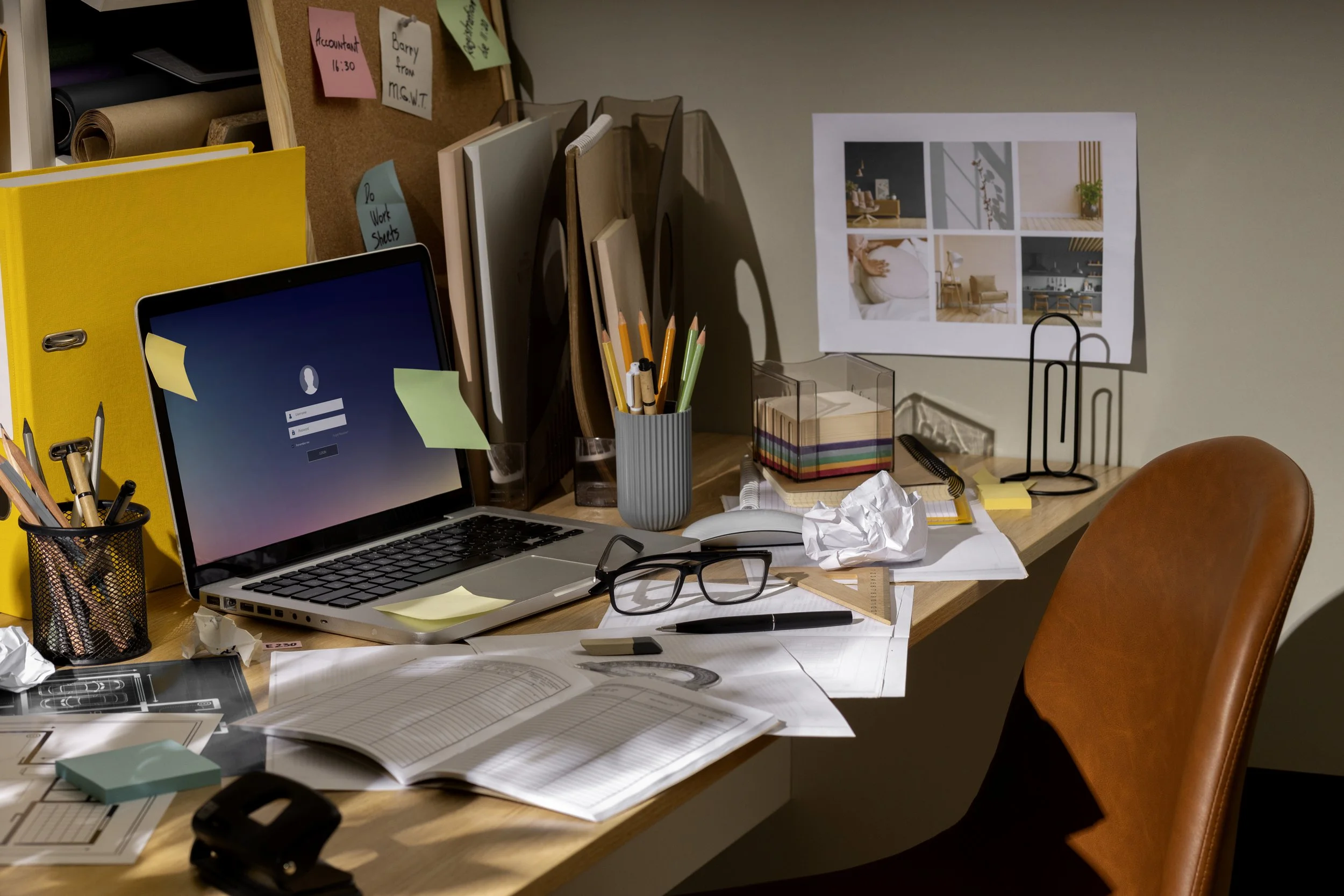
From the outside, the Interior Design industry still looks mostly creative, with beautiful renderings, stunning materials, finished spaces photographed perfectly for portfolios and Instagram. But behind every successful project is another layer running constantly in the background, drawings, revisions, coordination, site questions, vendor updates, client changes, contractor emails, and last-minute decisions that affect five other things at the same time.
None of these things feels huge individually, which is exactly why this kind of pressure is hard to notice at first.
Usually, it’s not one major problem making a project feel mentally heavy, but the hundreds of tiny unfinished details sitting quietly in the background. A missing dimension that still needs verification, material finishes awaiting approval, a drawing set needing one more review before it gets issued, and a client decision that now impacts lighting, millwork, and electrical plans, and it goes on.
As an Interior Designer or General contractor, the project doesn’t fully leave your head when work ends.
You carry it with you while making dinner, driving home, and lying in bed, randomly checking emails when you promised yourself you wouldn’t.
And I think a lot of designers quietly accept this as “just part of the job” without really talking about how mentally consuming it can become.
The Hidden Cost of Reopening Projects
One thing people outside of design studios probably don’t realize is how much mental energy gets drained from constantly jumping back into projects throughout the day.
You reopen a project to “quickly check one thing,” but your brain immediately has to reload the entire situation again.
What changed since the last revision?
Which drawing set is the most current?
Did that client update make it into every sheet?
Did the contractor receive the latest version?
Was that detail coordinated everywhere else too?
None of those questions seem like a big deal on their own. But when you’re doing this over and over across multiple projects, it adds up fast, and honestly, I think this is why so many interior designers end the day feeling mentally exhausted even when it doesn’t feel like they accomplished a huge amount of visible work.
Why Some Projects Feel Easier Than Others
What’s interesting is that two projects can have almost the same scope, yet feel completely different to manage day-to-day.
One constantly pulls your attention in every direction, and the other moves more smoothly. Usually, the difference isn’t creativity or talent. It’s clarity. The calmer projects tend to have cleaner drawing sets, more organized revisions, better communication, and fewer scattered updates across emails, PDFs, and markups. Not because they’re perfect, but because the information feels easier to trust. When you spend less time hunting for answers or double-checking revisions, the entire workload feels lighter.
What Actually Helps
Over time, I’ve noticed the projects that feel the least overwhelming usually have a few simple things in common. Not massive systems or complicated workflows, just less friction in the day-to-day process. Things like having one reliable place for revisions, cleaner coordination between drawings, drawing sets that are easier to navigate, and fewer scattered updates across apps, emails, and markups.
None of these things seems huge individually, but together they make a massive difference. They reduce how often the project keeps re-opening itself in your head throughout the day. And honestly, that’s usually when projects stop feeling so mentally heavy.
Because when the production side becomes more organized and easier to trust, designers get something back that’s incredibly hard to protect in this industry, and that is their mental space. The project stops constantly pulling your attention back in, and the creative side of the work finally has room to breathe again.